







Over time I’ve realized that a lot of our confusion about church can be boiled down into one simple contrast. It’s a distinction I wish I’d seen sooner, because it explains so much of what feels off in our modern models. The question is this:
Is your church primarily a place where, or a people who?
Those four words change everything. A “place where” church is defined by location and events. It’s the building where you got married, where you go on Sunday, where you hear a sermon, where you enjoy the worship, where your kids go to a program. When people talk about why they attend, the answers sound like Yelp reviews: “I like the preaching,” “The worship is great,” “They have a strong kids’ ministry,” “The lobby feels warm,” “The music fits my style.”
All of that is place‑where language. It treats the church like a spiritual vendor at the religious marketplace, offering a product we can evaluate and consume.
But the New Testament word for church, ecclesia, doesn’t describe a building at all. It describes an assembly—a group of people called out for a purpose. In Acts 19, the word is even used for a riotous crowd of craftsmen in Ephesus. They’re an ecclesia too, not because they’re holy, but because they are a people gathered around a shared cause.
When the same word is used for Christians, it carries that same force: the church is not a place to sit; it’s a people who have been called out and sent. Peter piles on the identity language in 1 Peter 2. He says we are a chosen race (not one ethnic group, but a new people whose primary identity is tied to a shared Father), a royal priesthood (people with direct access to God and a shared role in representing Him to others), a holy nation (living a public way of life that is set apart, visibly different from the world), and a people for God’s own possession (people who now belong to God and submit their time, money, and energy to Him).

Peter tells us why God has made us this kind of people: “that you may proclaim the excellencies of Him who called you out of darkness into His marvelous light.” That’s people‑who language. That’s purpose language. That’s not “a place where you go to get your spiritual batteries recharged once a week.” That’s a people who exist to proclaim something together.
Paul uses similar imagery. In 1 Corinthians 12, he doesn’t describe the church as a building with a stage and rows; he describes it as a body with many members. No body functions well if only ten percent of it is active and ninety percent just watch. Yet in many churches, that’s exactly what’s happening: a small core of staff and volunteers carries the weight while everyone else attends as spectators. If your body worked that way, we’d call it disabled.
In a place‑where church, several things inevitably happen:
- Consumerism creeps in. We evaluate church based on how well it meets our personal preferences.
- Spectating replaces participating. We watch others do the work of ministry from safe seats in the dark.
- A deep divide forms between “leaders” and “laity,” and most believers feel unqualified to pray out loud, teach Scripture, or share the gospel.
- We invent programs to simulate what a people‑who church does organically.
In a people‑who church, the emphasis flips. The key questions change from “What do I get when I go there?” to “Who are we becoming together, and what are we doing in the world?” Metrics shift from attendance to embodied life. The building shrinks in importance because the people understand that they are the temple, wherever they go—at work, at school, at home.
When we planted a house church, I learned this the hard way. I thought meeting in my home would automatically make us “people who.” Instead, I set up the garage like a tiny sanctuary: fifty chairs all facing forward, a screen, a teaching spot. Structurally, I had recreated a place where—a miniature version of what I already knew. People came, sat, watched, and left. They were knew each other more fully than in a large “place where” church, but the pattern was still too similar.
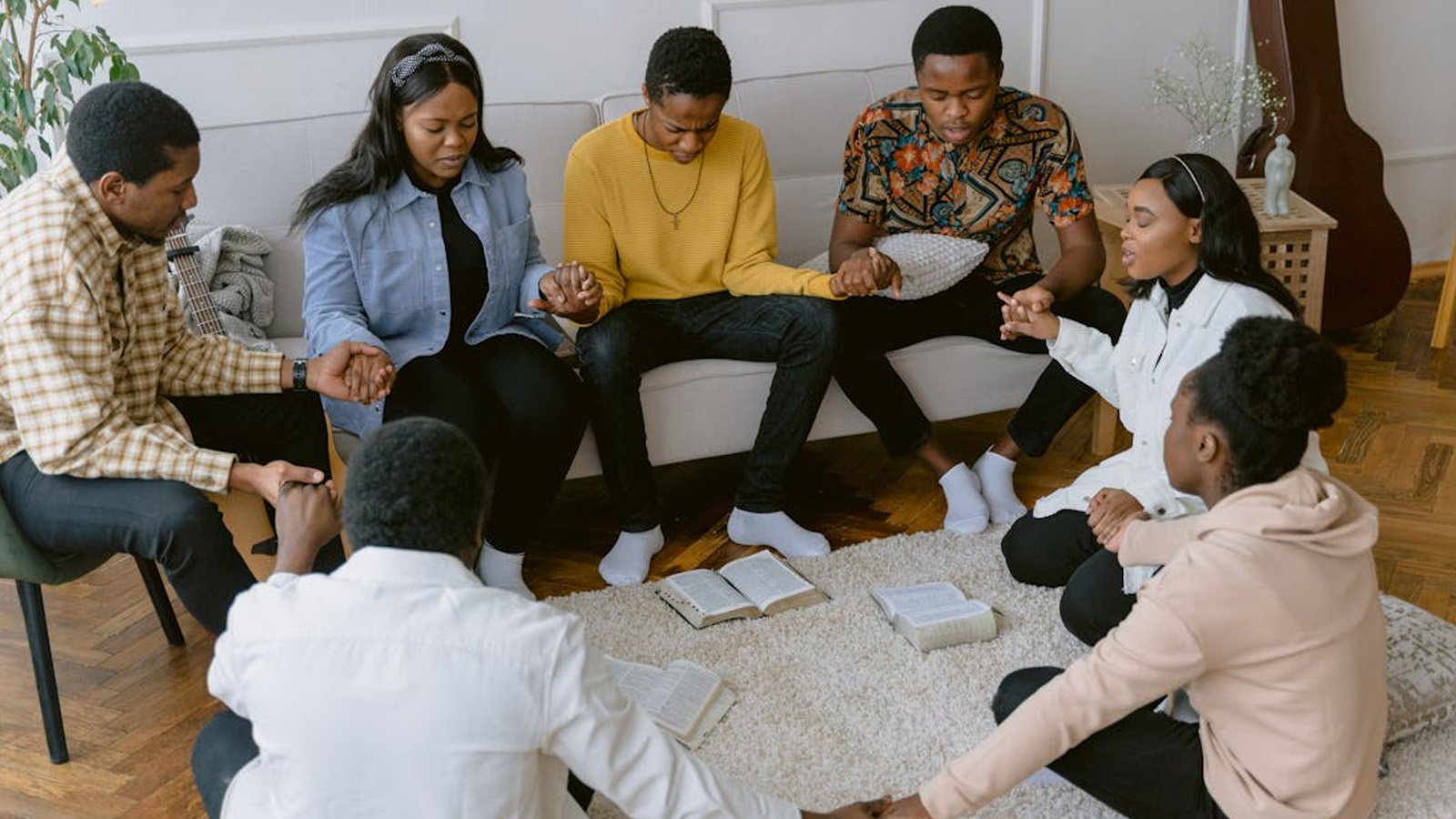
We had to deliberately change everything: limit the size, rearrange the room so we faced each other instead of a stage, shorten the teaching so others could interrupt, question, and contribute, and schedule regular weeks where we wouldn’t “meet” at all in the usual way—we’d simply go serve together, give away our offerings, fix a roof, help a single mom, show up on Skid Row, and act as the royal priesthood we said we were.
None of that was perfect. Every church is still full of those “nasty little things called humans,” as I often joke. But here’s what changed: people stopped seeing church as a place they went and more as a people they were. Their identity shifted, and with it, their behavior.
So, here’s a simple diagnostic: If someone filmed your life for a week, would they say you belong to a place where you attend, or to a people who you live and serve with? If someone filmed your life for a week, would they say you belong to a place where you attend, or to a people who you live and serve with? Share on X
The New Testament vision isn’t fundamentally about your building size, your program list, or your Sunday production value. It’s about whether you and your community are living as a chosen race, a royal priesthood, a holy nation, a people for His own possession—a people who proclaim His excellencies in the real world.
To dive a bit deeper into this notion of “church,” please listen to our podcast:
Here is the audio podcast (the Cold-Case Christianity Weekly Podcast is located on iTunes or our RSS Feed):
 For more information about the nature of Biblical faith and a strategy for communicating the truth of Christianity, please read Forensic Faith: A Homicide Detective Makes the Case for a More Reasonable, Evidential Christian Faith. This book teaches readers four reasonable, evidential characteristics of Christianity and provides a strategy for sharing Christianity with others. The book is accompanied by an eight-session Forensic Faith DVD Set (and Participant’s Guide) to help individuals or small groups examine the evidence and make the case.