


















We live in a culture that thinks of marriage as a kind of contract: you bring your part, I bring mine, and as long as we’re each doing our share, we’re good. People toss around phrases like “marriage is 50/50” as if that were obviously true and obviously fair. But if you’re a Christian, that isn’t how you should think about marriage. A Christian marriage isn’t 50/50, and it’s not even 100/100. A Christian marriage is 100–0. You give 100%, and you set your expectation of return at 0%.
That sounds radical and maybe even naïve until you think about what Scripture describes. Husbands are told to love their wives the way Christ loves the Church. That’s not a negotiated percentage; that’s sacrificial, covenantal love. Christ doesn’t love the Church 50/50. He doesn’t love us based on what we’ve earned from Him in any given week. He loves us fully, even at great cost, even when we are not living up to our end. So, if our model for marriage is Christ and the Church, then we’re not looking at a contract where we carefully monitor who has done more dishes this week, who has apologized more often, or who is winning in the “fairness” scoreboard. We are looking at a covenant in which one person says, “I am going to give everything I’m called to give, regardless of what I get back today.”
Practically, this means that everything I say to my wife is not just between me and her—it’s between me and Jesus. I got tired of apologizing to Jesus for things I had said to my wife. Eventually, I decided I didn’t want to say anything to her that I couldn’t justify saying to Him. That shift alone changed my tone, my patience, and the way I handled conflict. When you decide that every harsh word will one day be something you have to explain before Christ, you begin to guard your words more carefully. The standard is no longer “What can I get away with in this argument?” but “What can I say that I won’t be ashamed to have said when I stand before God?” When you decide that every harsh word will one day be something you have to explain before Christ, you begin to guard your words more carefully. Share on X
People sometimes push back on this 100–0 idea by asking, “But what if my spouse doesn’t do their part? What if I’m the only one giving?” That’s exactly how a contract mindset thinks: “I’ll do my part if you do yours.” But the point of a covenant is that your faithfulness doesn’t rise and fall with your spouse’s mood or performance. Of course, we’re not talking about enabling abuse or pretending evil is good, but in the ordinary, daily life of a marriage, someone has to go first. Somebody has to be the first to stop keeping score, the first to apologize, the first to sacrifice, the first to love when it doesn’t feel deserved. In a Christian marriage, you have already decided that person is you.
This is why I’ve said that you ought to love your marriage more than you love your spouse. My wife doesn’t like the sound of that, but she understands what I mean. Your commitment to the institution of marriage itself—to the promise you made, to the covenant you entered into before God—has to be larger than your temporary frustrations with the person you married. Feelings will come and go. There will be days you don’t even like each other. If all you have on those days is your feelings, you will be tempted to walk away. But if you have a deep conviction about what marriage is, you’ll stay and work even when the feelings aren’t cooperating.
I’ve also noticed that people who elevate marriage in their thinking, who see it as something precious and worth protecting, tend to have better marriages. They prioritize time together. They work at it. They treat it as a ministry, not a hobby. For many men, especially men who come to faith later in life, there’s a temptation to see “real ministry” as something outside the home: the mission field, the pulpit, some public platform. I was guilty of that too. I thought I had to go to seminary, become a pastor, and be “super‑Christian” out there. But the truth is, if you are married, your first ministry is your marriage. You are not called to love your church or your mission field the way Christ loves the Church. You are called to love your spouse that way. If you get that wrong, nothing you build outside your home will compensate for the loss.

In the end, a 100–0 marriage is not about one person being a doormat; it’s about both people seeing their marriage as a God‑given mission field. Your home becomes the place where you practice the kind of selfless, covenantal love that the world cannot understand. Your kids, your friends, and even unbelievers around you will see something different—something that doesn’t look like a negotiated contract based on fairness, but like a covenant based on grace. And that may be the most powerful sermon your marriage ever preaches.
To learn more about this approach to marriage and relationships, listen to our podcast:
Here is the audio podcast (the Cold-Case Christianity Weekly Podcast is located on iTunes or our RSS Feed):
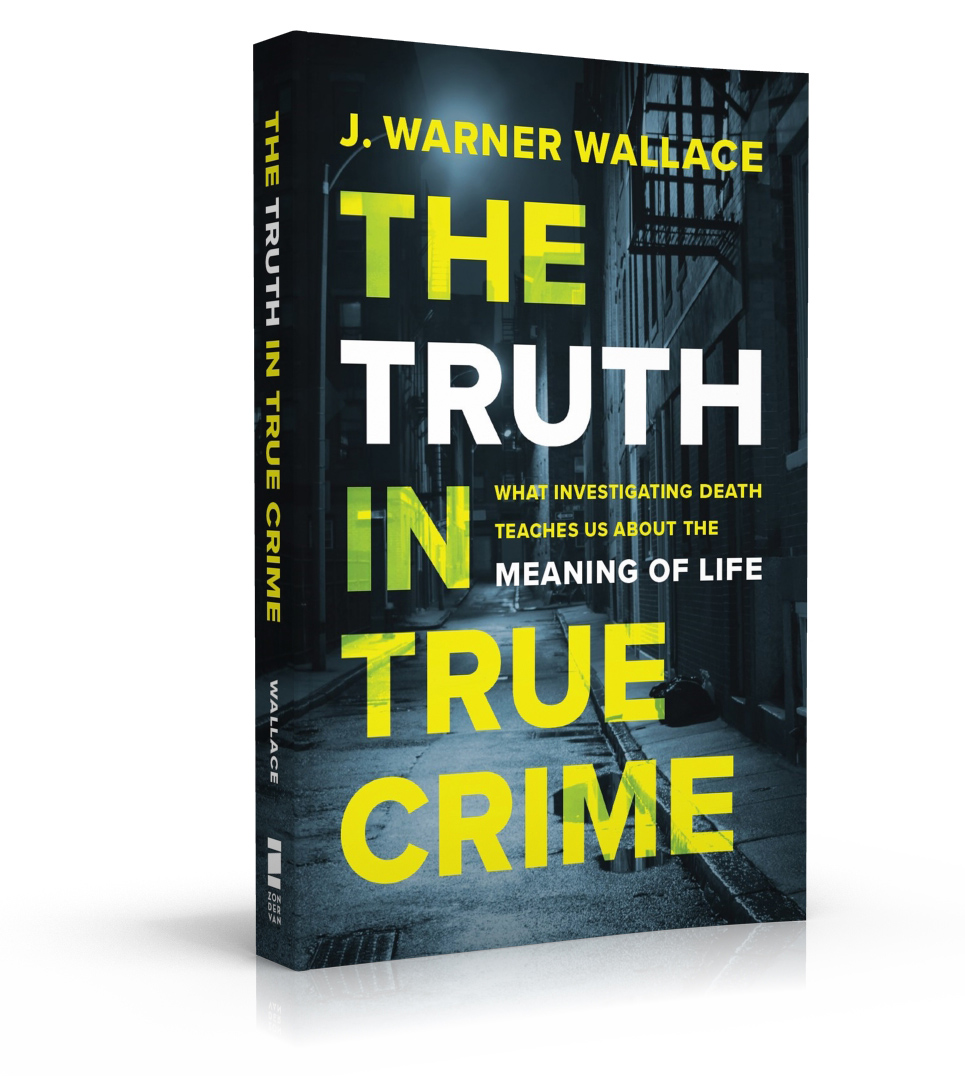 For more information about how to flourish based on secular research and the ancient wisdom of the bible, please read The Truth in True Crime; What Investigating Death Teaches Us About the Meaning of Life. This book teaches readers 15 rues for life, recognized in murder investigations. It also makes a case for the reliability of the Bible from Biblical anthropology. The book is accompanied by a sixteen-session Truth in True Crime Video Series (and Participant’s Guide) to help individuals or small groups examine the evidence and make the case.