








For many skeptics, the Noah story isn’t just false; it’s category‑breaking. As soon as you insert a miracle into what you’re calling “history,” they assume you’ve left the realm of facts and entered the realm of mythology. I held that view for years. If a text mentioned the supernatural, I treated it as immediately unhistorical.
But that approach doesn’t come from evidence; it comes from a presuppositional philosophical decision. We’ve simply decided, in modern Western culture, that history and science must be strictly naturalistic. Nothing outside space, time, matter, physics, and chemistry is worthy of consideration. Once you make that move, any talk of a flood sent by God is ruled out before you ever look at a rock or a text.
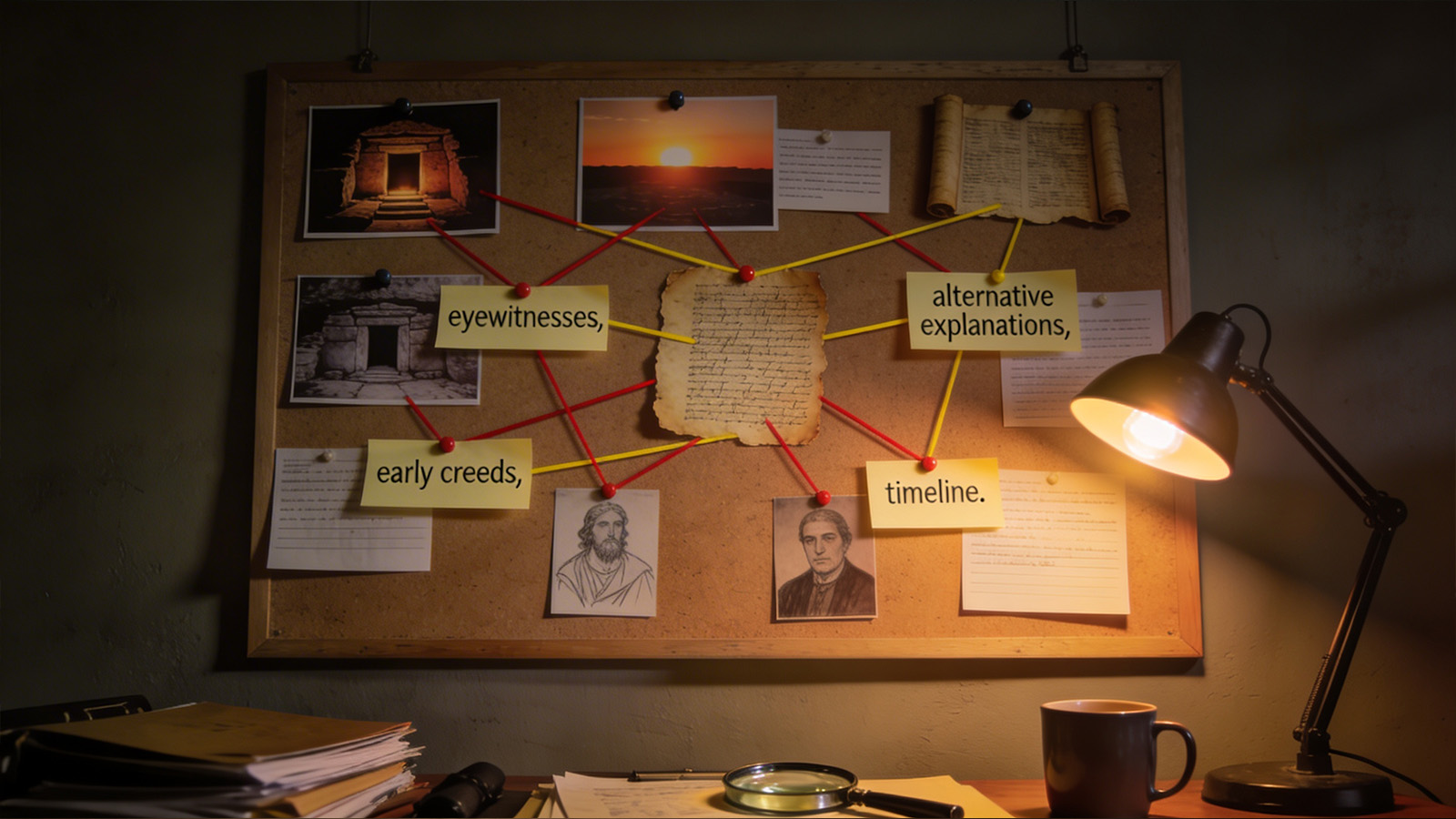
As a detective, I must resist that presuppositional impulse. In cold cases I routinely investigate events I didn’t witness, based on limited evidence that survived. I don’t get to throw out a witness just because I don’t like what he’s claiming. I must ask: Is there enough cumulative evidence to keep this claim on the table?
With the flood, several questions matter:
- Is a miraculous judgment logically possible if a personal Creator truly exists?
- Do the ancient accounts look like pure fantasy, or like memory plus interpretation?
- Does anything in the geological record fit a large‑scale, water‑driven catastrophe?
On the first question, everything turns on Genesis 1. If a personal Being is powerful enough to bring all space, time, and matter into existence from nothing, then the most astonishing miracle is already recorded on the first page of the Old Testament. Compared to creating a universe, rearranging water on a single planet is “small potatoes.” The real issue isn’t “Are miracles possible?” but “Does that God exist?” As someone who, as an atheist, accepted Big Bang cosmology – a universe with a beginning – I had to wrestle with the reality of a “Big Banger.” Compared to creating a universe, rearranging water on a single planet is “small potatoes.” The real issue isn’t “Are miracles possible?” but “Does that God exist?” Share on X
On the second question, I looked at how the authors of the Gilgamesh, Atrahasis, and Genesis accounts each described the flood. All three talke about a catastrophic water event, a small group surviving in a boat, animals preserved, a mountain landing, and a sacrifice afterward. The core “what” is stable. The “why” is where things split. In the pagan accounts the gods are petty, hungry, fearful, and divided. Humans are created as labor and noise, and the flood is basically divine annoyance management. In Genesis, a single holy God judges violence and corruption, preserves a righteous family, and then makes a covenant grounded in human beings bearing His image.
That pattern – shared event (“what”), but divergent theologies (“whys”) – is exactly what you’d expect if a real catastrophe occurred, but different cultures were drifting theologically as they moved away from the original knowledge of God. The mythological elements in the pagan stories don’t disprove Genesis; they highlight how different the biblical God is.

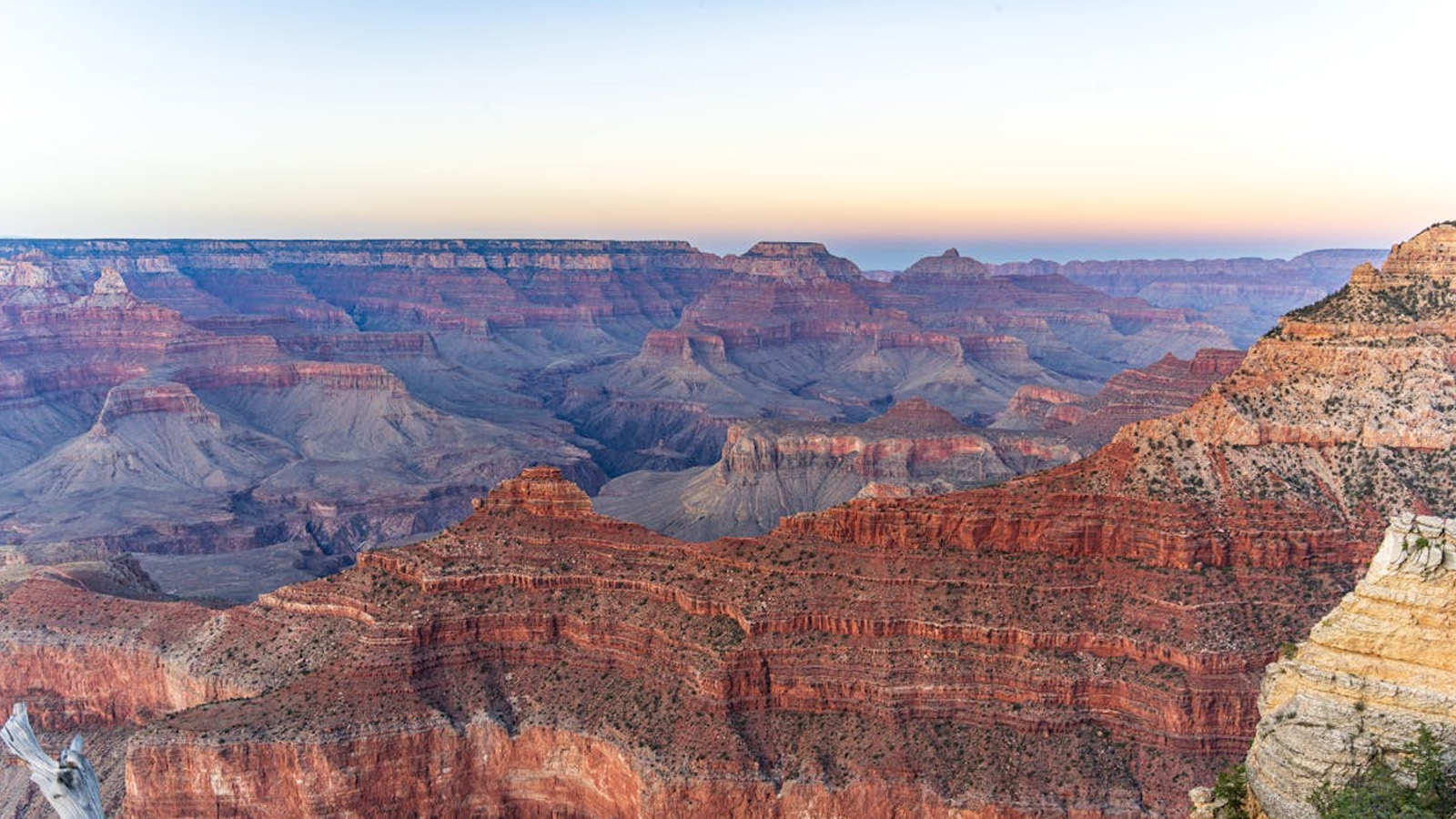
What about the rocks? I’m not a geologist, and honest Christians disagree about whether the flood described in Genesis was global in the strict physical sense or regionally global – a devastating flood that wiped out the entire known world of that time. But there are features in the geological record that are at least compatible with a large‑scale flood: thick, widespread sedimentary layers, marine fossils found high above current sea level, evidence of rapid burial, and signs of high‑energy water movement in certain formations.
Mainstream geology often explains these with rising and falling shallow seas over millions of years. Some Bible‑believing geologists argue that a catastrophic flood better explains the same data. The point is not that we can prove the flood from geology alone. The point is that the rocks do not force us to rule it out. The data can be read in more than one way.
At that stage, I step back and ask a broader credibility question. When I look at Scripture, I find it casually describing things like the hydrological cycle, wind circuits, ocean paths, and even a beginning of the universe in ways that match what we’ve only recently verified scientifically – often in texts that were never intended to be read as science manuals. The Bible’s track record on these “side issues” gives me reason to trust it when it speaks about events I can’t fully reconstruct.
You don’t have to resolve every geological debate to take Genesis seriously. You do have to ask: Am I rejecting the flood because the evidence is weak – or because I’ve already decided miracles can’t happen?
If God is who Genesis 1 claims He is, then a judgment like Genesis 6–9 isn’t just possible; it’s exactly the kind of thing a holy, personal, Creator God might do in a world that has filled itself with violence – and exactly the kind of event humans would remember, retell, distort, and debate for the rest of history.
For a deeper discussion of the ancient Biblical flood account, please listen to our podcast:
Here is the audio podcast (the Cold-Case Christianity Weekly Podcast is located on iTunes or our RSS Feed):
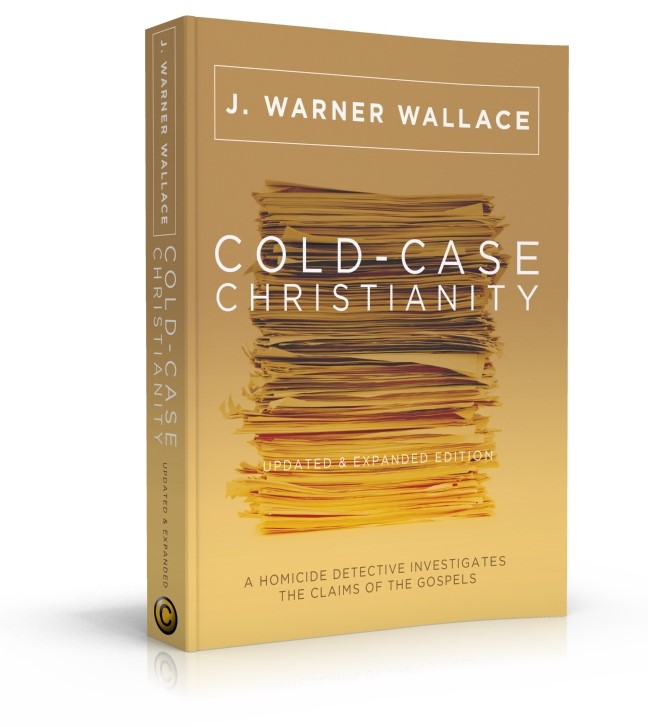 For more information about the reliability of the New Testament gospels and the case for Christianity, please read Cold-Case Christianity: A Homicide Detective Investigates the Claims of the Gospels. This book teaches readers ten principles of cold-case investigations and applies these strategies to investigate the claims of the gospel authors. The book is accompanied by an eight-session Cold-Case Christianity DVD Set (and Participant’s Guide) to help individuals or small groups examine the evidence and make the case.