










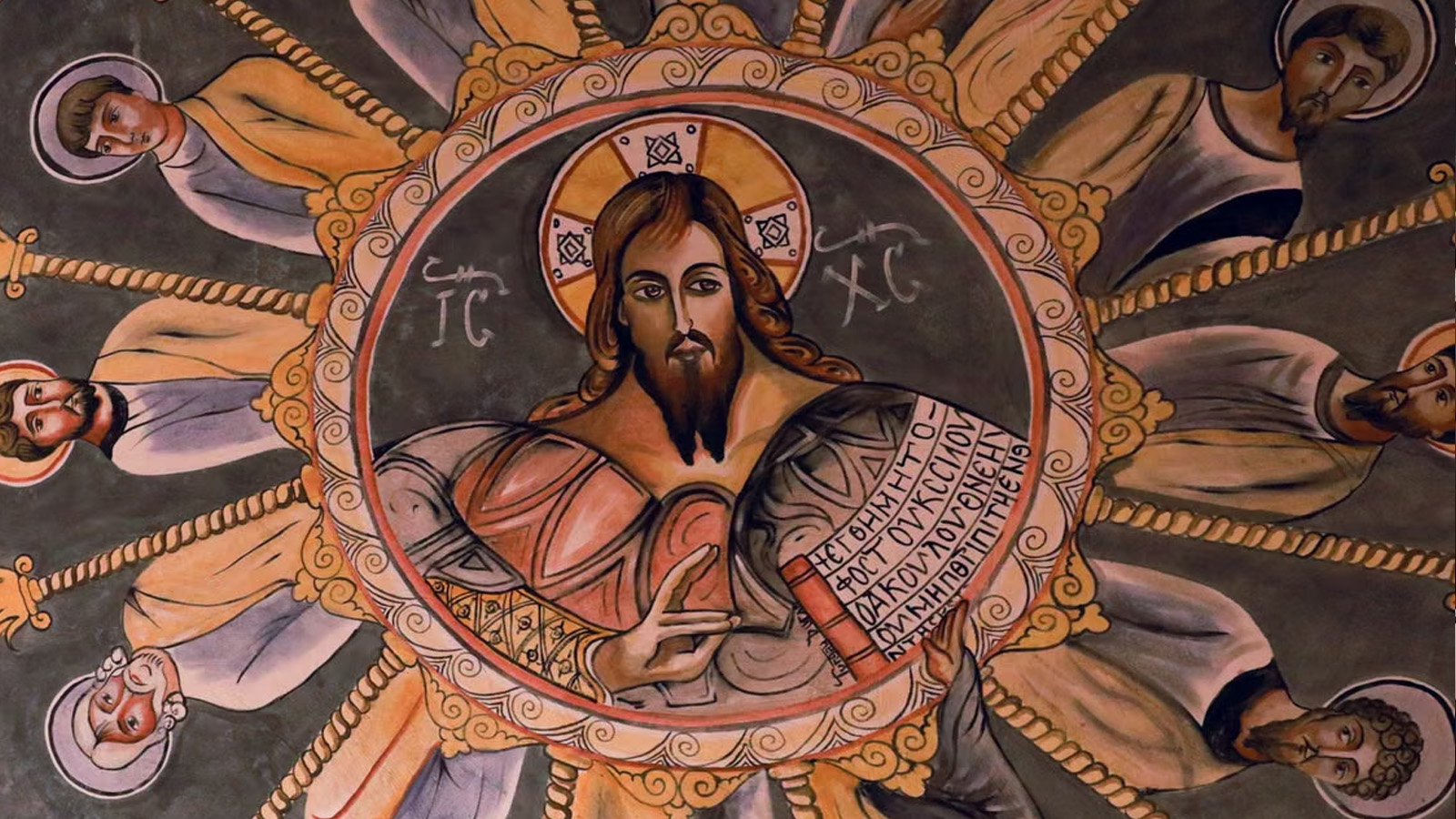
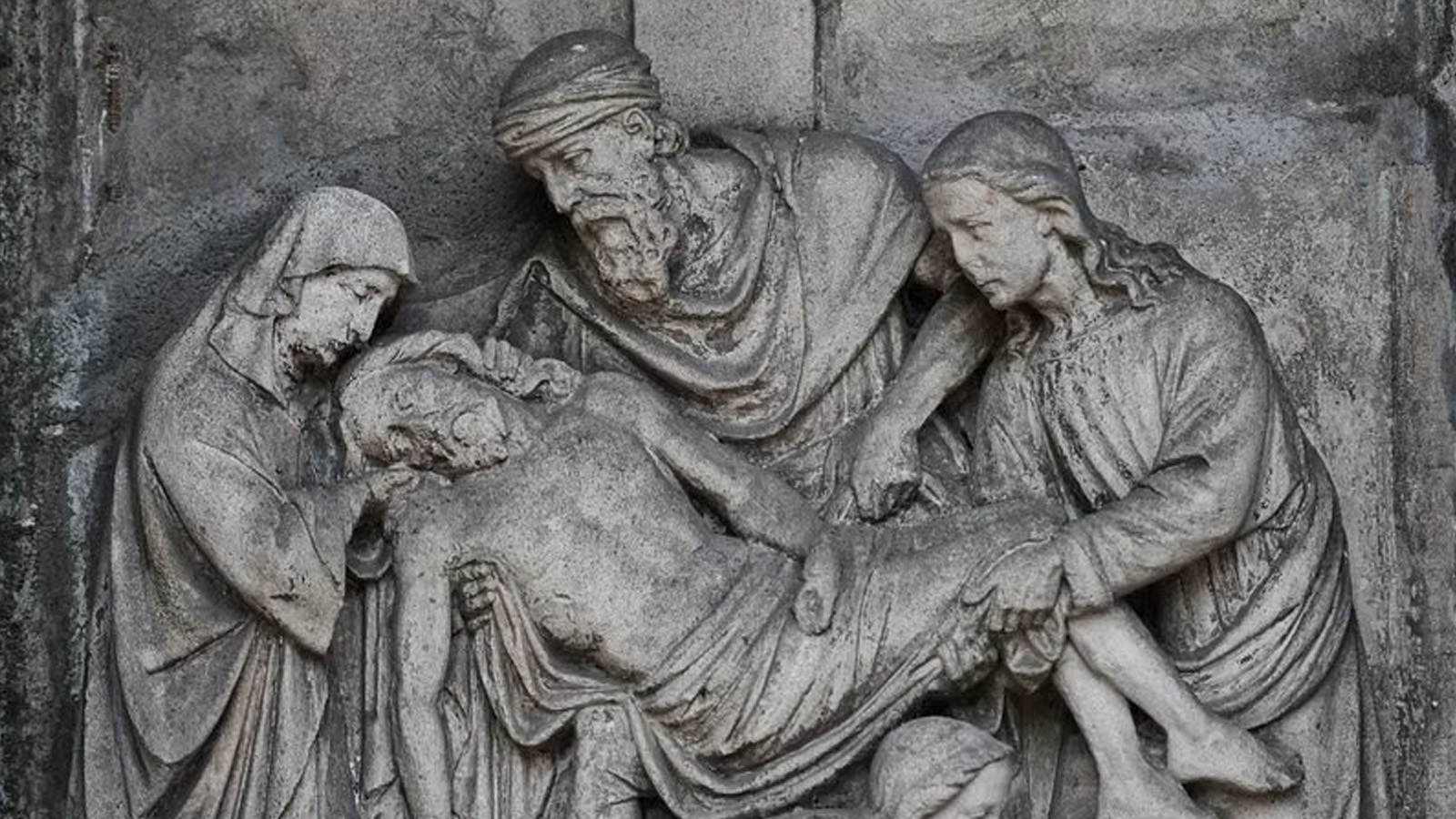


How do you investigate the “missing centuries” of the Shroud of Turin like a real cold-case detective? In this third episode on the Shroud of Turin, J. Warner Wallace walks through the most popular claims about pre‑Turin relics—sudariums, veils, and rival “shrouds”—and explains why none of them close the chain‑of‑custody gap needed to treat the Turin cloth as first‑century evidence for Jesus.
If you find this episode helpful, please follow the podcast so you never miss an update, and take a moment to rate and review the show—your review really helps more people discover Cold-Case Christianity. Here is the audio podcast (the Cold-Case Christianity Weekly Podcast is located on iTunes or our RSS Feed):
 For more information about the reliability of the New Testament gospels and the case for Christianity, please read Cold-Case Christianity: A Homicide Detective Investigates the Claims of the Gospels. This book teaches readers ten principles of cold-case investigations and applies these strategies to investigate the claims of the gospel authors. The book is accompanied by an eight-session Cold-Case Christianity DVD Set (and Participant’s Guide) to help individuals or small groups examine the evidence and make the case.














Alan H. McLeod
July 15, 2026 at 7:08 pm
I argue that with the Shroud of Turin the unique, unreplicable nature of the physical evidence outweighs the gaps in the chain of custody. The unique properties preclude forgery, contamination or tampering so chain of custody gap is not decisive.
If we treat the Shroud as a Black Swan, I don’t see why elevating the chain of custody to be an absolute show stopper makes sense in light of unique, unreproducible properties.
J. Warner Wallace
July 20, 2026 at 11:34 am
I actually think you’re putting the cart before the horse here.
I’m happy to grant that the Shroud is technically interesting and that the image isn’t yet fully explained. But in every other area of forensic or historical work, we do not let “I don’t know exactly how this was done” override basic questions of provenance and custody.
A few thoughts:
Calling the Shroud “unique” and “unreplicable” assumes the very point that’s under dispute. There are several live natural families of explanations on the table (chemical surface reactions, energy/thermal processes, sophisticated medieval techniques). None has nailed a perfect replica, but partial successes are enough to say we haven’t exhausted human or natural possibilities. “Not yet reproduced to everyone’s satisfaction” is very different from “cannot be produced by any natural means.” In addition, the troublesome way in which the shroud has been stored over the years only complicates our ability to reproduce the precise manner in which it was produced.
Chain of custody isn’t a minor technicality when the claim is “this is the burial cloth of Jesus and a visual record of the resurrection.” The first secure appearance is in 14th‑century France, in a culture awash in relics, followed by a bishop explicitly alleging forgery and a pope who allows veneration only as an image, not as a proven relic. On top of that, the one transparent radiocarbon test we have put the tested material right in that medieval window. In any other case, that combination of late appearance and missing history would be a huge red flag.
The “black swan” language doesn’t really fit. A black swan, in the technical sense, is an event that forces us to revise our model of how the world works. Here, we don’t have independent evidence that this cloth even comes from 1st‑century Judea (I’ve addressed all those claims in prior podcasts), let alone that it records a resurrection. What we have is an unusual image on a cloth that steps into the record over a thousand years later. That’s not a data point that compels a revision of our historical model; it’s a data point that demands more historical and contextual support than we typically get for a medieval relic, and the Shroud doesn’t provide it.
In law, you know this move would never fly: “Because we can’t reconstruct every detail of how the crime was committed, we must ignore the gaps and contradictions in the alibi and treat my client as innocent.” Lack of a full “how” has never been enough to overturn what we already know about “where,” “when,” and “under what circumstances” an object or event shows up.
So I’d put it this way: yes, there are still open questions about how the image was produced. But that ignorance is not positive evidence. It doesn’t preclude forgery, it doesn’t erase the 1,300‑year gap, and it doesn’t reverse the burden of proof. Until there is a credible, continuous historical trail from a 1st‑century tomb to Turin, the chain‑of‑custody problem remains central, not optional—even if we never fully agree on the image mechanism.