








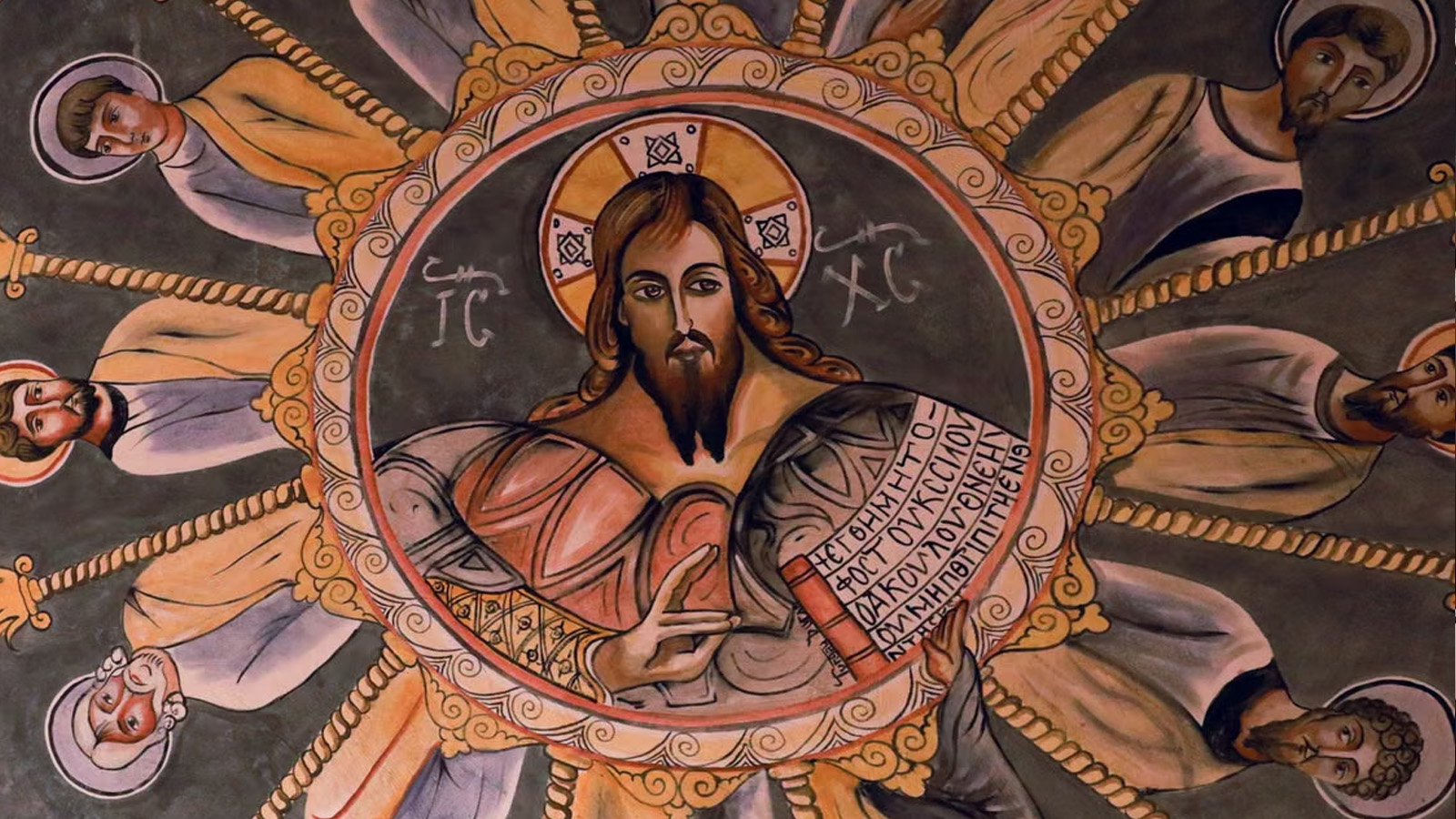

For some people, the deity of Christ feels like a side issue—an advanced doctrinal debate for theologians with too much time on their hands. “Does it really matter,” they ask, “whether Jesus is fully God, as long as we follow His teachings and treat Him with respect?”
When I started taking my grandkids’ faith seriously enough to write out hand‑annotated Bibles for them, I had to decide what was essential. What would I want them to see clearly every time they opened certain passages? One non‑negotiable was this: if Jesus is anything less than God, Christianity collapses in all the places that matter most.
Let’s start with worship. The Bible is brutally clear: worship belongs to God alone. In the Old Testament, whenever people bow to created things—idols, angels, kings—God condemns it. Yet in the three chapter ones we looked at—John 1, Colossians 1, Hebrews 1—Jesus is placed in the worshiped category, not the worshiper category. In Colossians, the language is hymn‑like, likely reflecting early Christian songs of worship sung to Jesus. In Hebrews, God commands the angels to worship the Son and addresses Him as “O God” with an eternal throne.
If Jesus is anything less than God, then directing that worship toward Him is idolatry. If He is God, refusing to worship Him is rebellion. There’s no safe middle ground where we can say, “He’s just an exalted creature, but we’ll treat Him as if He were God.” If Jesus is anything less than God, then directing that worship toward Him is idolatry. Share on X
Second, let’s consider authority. Why should we adjust our views on life, marriage, sexuality, forgiveness, enemies, money, eternity just because Jesus says something? We only have a rational obligation to radically reorder our lives if He speaks with God’s authority. That’s exactly what emerges from these chapters.
In John 1, Jesus is the Word who reveals God. In Colossians 1, all the fullness of God dwells in Him bodily. In Hebrews 1, He is the exact imprint of God’s nature and God’s final speech to humanity: in the past, God spoke through the prophets; now He has spoken by His Son. If that’s true, Jesus’ words aren’t one religious opinion among many. They are God’s own explanation of reality, delivered in human flesh.

Third, let’s think about salvation. The central claim of Christianity is not that God advises us but that God saves us—He deals with sin, that deep moral and spiritual fracture we can’t repair on our own. The Old Testament insists that only God ultimately forgives sins and redeems His people.
Yet in Colossians 1, Paul says that through Jesus God “reconciles all things to Himself,” making peace by the blood of His cross. In Hebrews 1, the Son “makes purification for sins” and then sits down at the right hand of the Majesty on high. Those are God‑jobs, not creature‑jobs.
I’ve heard critics describe the cross as “cosmic child abuse”—a cruel Father punishing an innocent third party so He can forgive the guilty. That accusation only has force if Jesus is just another created being. The New Testament picture is very different, however: God Himself, in the person of the Son, bears the cost of our sin. The Creator steps into His creation, takes on flesh, and absorbs the justice that would otherwise fall on us.
If Jesus is less than God, then the cross is morally monstrous. If Jesus is God, the cross becomes the most astonishing act of self‑sacrifice in history.
Fourth, let’s look at assurance. Everybody puts their trust in something—career, money, government, relationships, even their own sincerity. Whatever you trust most is, functionally, your god. If Jesus is just a high‑ranking angelic being or a uniquely anointed man, then He is still finite, still within the circle of created things.
But the three chapter ones insist He’s eternal, uncreated, the One in whom all things hold together, the One through whom all things were made, the One who upholds the universe by the word of His power. That’s the kind of Being you can safely rest your eternity on.
Finally, there’s the question of continuity. Some skeptics pit the authors of the Gospels against the writings of Paul, as if they represent two different Jesuses: the simple moral teacher of the Gospels and the cosmic Christ of Paul’s letters. But if you line up John 1, Colossians 1, and Hebrews 1, you don’t see contradiction; you see convergence.
- John: Jesus is the eternal Word who is with God and was God, through whom all things were made, who becomes flesh.
- Paul: Jesus is the image of the invisible God, firstborn in rank over all creation, in whom all the fullness of God dwells bodily, through whom all things are created and reconciled.
- The Author of Hebrews: Jesus is the radiance of God’s glory, the exact imprint of His nature, the One through whom God made the world, who sustains all things, purifies sins, and sits at God’s right hand as Lord.
All three authors are talking about the same Jesus, from different angles, using different language, but consistently placing Him where only God belongs.
The deity of Christ matters. It shapes who we worship, whose words rule our lives, who truly saves us, and where we place our ultimate trust. It’s not theological window dressing—it’s the core, load‑bearing wall of the Christian faith. Remove it, and the whole structure starts to fall.
If you’re teaching kids, discipling new believers, or even wrestling with this yourself, start where I started with my grandkids’ Bibles: walk slowly through John 1, Colossians 1, and Hebrews 1, and ask a simple but life‑altering question—What kind of Being are these writers describing?
To learn more about the strength of the case for Jesus’ deity from these three chapters in the New Testament, listen to our podcast:
Here is the audio podcast (the Cold-Case Christianity Weekly Podcast is located on iTunes or our RSS Feed):
 For more information about the impact Jesus and His followers had on science, read Person of Interest: Why Jesus Still Matters in a World That Rejects the Bible. This unique and innovative book makes a case for the historicity and Deity of Jesus from history alone, without relying on the New Testament manuscripts. It contains over 400 illustrations and is accompanied by a ten-session Person of Interest DVD Set (and Investigator’s Guide) to help individuals or small groups examine the evidence and make the case.