














Most of us are comfortable with a distant God—powerful, mysterious, “out there” somewhere. We might even admit we can’t fully understand Him. But John 1 confronts us with something far more unsettling: the claim that the eternal Word of God, the One through whom all things were made, became flesh and pitched His tent among us. If you take that seriously, it forces you to rethink not only who Jesus is, but what you believe about God’s nature.
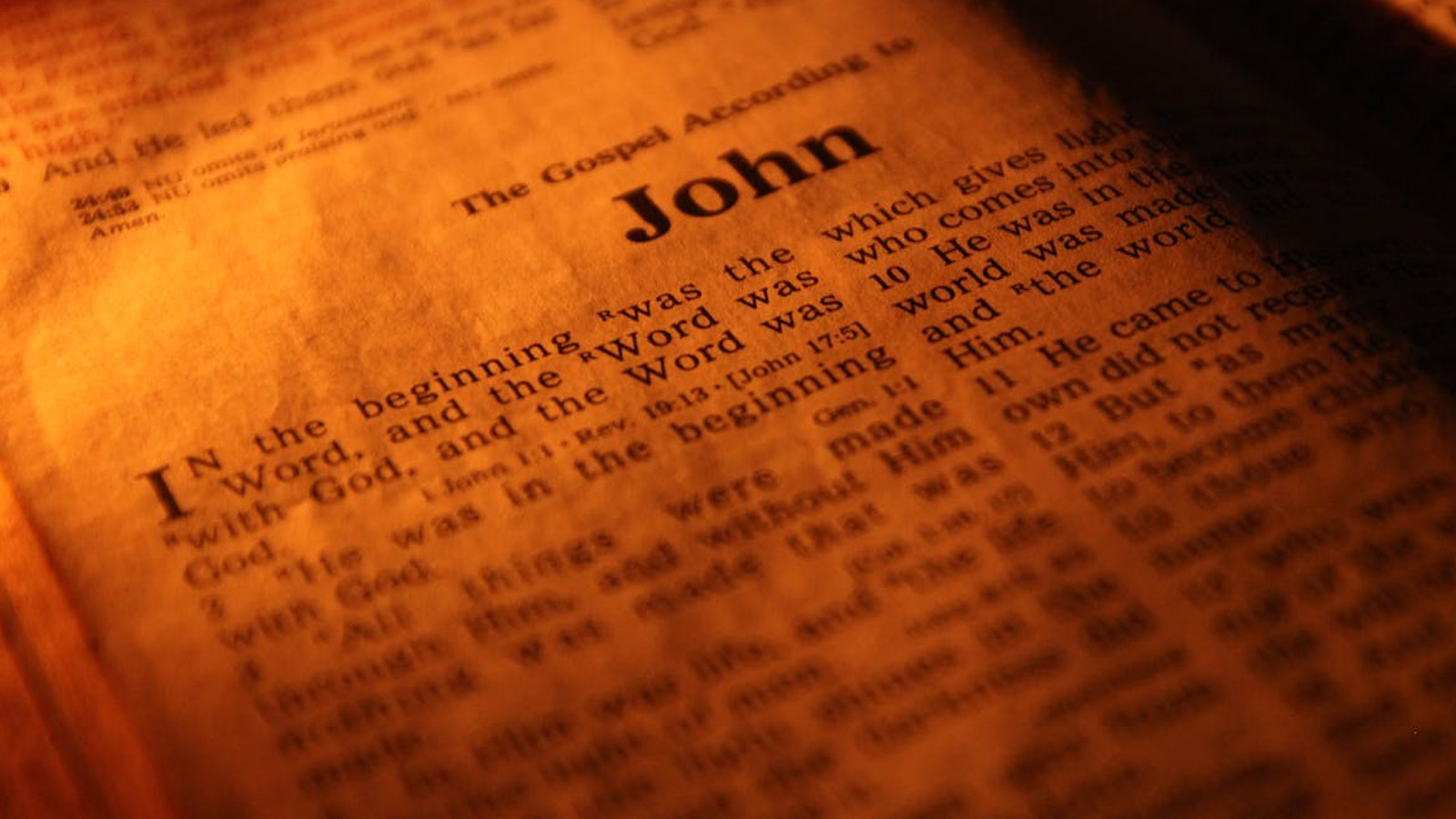
John 1:14 makes a stunning statement: “The Word became flesh and made His dwelling among us.” To become something, you must exist before you take on that new state. I became a father at a certain moment in time; before that, I existed, but I wasn’t a father. John says the Word “became flesh,” which means He pre‑existed before taking on material, physical humanity. That’s not how it works for us; we do not pre‑exist and then take on flesh. We come into existence as flesh. Jesus is clearly in a different category.
John adds that the Word “made His dwelling among us.” The underlying language carries the idea that He “pitched His tent” or “tabernacled” among us. That’s not an accidental metaphor. In the Old Testament, the tabernacle was where God’s glory dwelt in the midst of Israel. It was the place where heaven and earth met, where God’s presence was concentrated. To say that the Word pitched His tent among us is to say that God’s glory has now taken up residence in a human body.
This is exactly what Jesus later refers to when He says, “Destroy this temple, and in three days I will raise it up.” His listeners are outraged because they’re thinking about the physical temple in Jerusalem, the building that took so long to construct. But John clarifies that Jesus is speaking about His own body. The true temple, the true dwelling of God’s glory, is no longer a building—it is Jesus Himself, the Word‑made‑flesh.
John goes on: “We have seen His glory, glory as of the only Son from the Father, full of grace and truth.” That little phrase “only Son” is doing a lot of work. It means unique, one‑of‑a‑kind, not one son among many. There are many prophets, many servants, many messengers, but only one who bears this kind of glory. In the Old Testament, no human being is ever described as being “full of grace and truth” in the way God is. Scripture presents God as holding together in fullness what we constantly separate—justice and mercy, righteousness and compassion, truth and grace. Humans always tilt one way or the other. Only God holds them perfectly. To describe Jesus this way is to step directly into deity language.
John sharpens the contrast by mentioning Moses. He says, “The law was given through Moses; grace and truth came through Jesus Christ.” Moses is revered, but the language is careful: the law was given through Moses. He’s a receiver and a deliverer. By contrast, grace and truth “came through” Jesus in a way that presents Him as their source, not merely their messenger. All of us may display some measure of grace and truth; the fullness of both comes through Christ alone.

Then John raises the theological stakes in verse 18: “No one has ever seen God; the only God, who is at the Father’s side, He has made Him known.” However you walk through the manuscript discussions on this verse, John is clearly distinguishing between God whom no one has seen (the Father) and the “only God” at the Father’s side (the Son). The Son is described as unique, one‑of‑a‑kind God, in intimate fellowship with the Father, and He is the one who makes the Father known. Once again, you bump into what seems like a contradiction—God and yet with God—unless you accept that there is one divine essence shared by distinct persons, the very thing the doctrine of the Trinity is meant to express.
When John the Baptist speaks about Jesus, he reinforces this. He says, “He who comes after me has surpassed me because He was before me.” Chronologically, Jesus is conceived after John. Yet John can say He “was before” him. That only makes sense if Jesus pre‑exists His human conception. John also calls Him the “Lamb of God, who takes away the sin of the world.” In the Old Testament, God repeatedly insists that He alone is the one who blots out transgressions, who casts sins into the depths of the sea, who forgives iniquity. Forgiveness at that level is a divine act. When John says Jesus takes away the sin of the world, he is assigning to Him a role reserved for God.
John further notes that Jesus is the one who will baptize with the Holy Spirit. In the Old Testament, it is God who says, “I will pour out my Spirit” on His people. The one who dispenses the Spirit, who pours Him out, is God. Yet here that role is assigned to Jesus, marking Him again as something other than a mere human prophet.
By the time you finish John 1, you’re left with a picture that is hard to domesticate.
You don’t just have a wise teacher, a miracle worker, or even a Spirit‑anointed king. You have the pre‑existent Word, the creator of all things, the true light, the giver of life, the one and only Son, full of grace and truth, the Lamb of God, the giver of the Spirit, the only God at the Father’s side who makes God known. In other words, you have God in the flesh, tabernacling among us.
If that’s true, then Christianity isn’t simply about admiring a moral teacher or imitating a prophet. It’s about responding to the God who stepped into His own creation, lived among us, and revealed Himself in terms so concrete we could see and hear and touch Him. John’s opening chapter is not asking you to add a religious label to your life. It’s asking you to decide what you will do with the Word who became flesh and dwelt among us.
To learn more about the evidence for Jesus’ deity in John Chapter 1, please listen to our podcast:
Here is the audio podcast (the Cold-Case Christianity Weekly Podcast is located on iTunes or our RSS Feed):
 For more information about the reliability of the New Testament gospels and the case for Christianity, please read Cold-Case Christianity: A Homicide Detective Investigates the Claims of the Gospels. This book teaches readers ten principles of cold-case investigations and applies these strategies to investigate the claims of the gospel authors. The book is accompanied by an eight-session Cold-Case Christianity DVD Set (and Participant’s Guide) to help individuals or small groups examine the evidence and make the case.