
















Starting conversations about God is often the hardest part of evangelism. Most Christians aren’t afraid of talking about their faith; they’re afraid of the first sentence. That opening moment—when the conversation shifts from sports, weather, or work to eternity—can feel like jumping off a cliff. But once you get past that first sentence, it becomes easier. The key is to overcome the fear of first contact.
When I talk about evangelism, I often reference my friend Jonathan Carl, author of Unsilenced. He believes that many of us have been silenced—not because the world told us to stay quiet, but because fear stopped us from speaking up. His approach is simple but powerful: he asks everyone he meets a short, direct question—“What do you think happens when you die?” It’s only seven words, but those seven words open the door to deep spiritual conversation.
That question does two things. First, it gets you talking about eternal things right away. Second, it’s diagnostic—it reveals something about the person you’re talking to. You’ll quickly discover what they believe, which helps you respond thoughtfully. Some people might say nothing happens—they just return to the dirt. Others might believe in reincarnation or karma. Wherever they stand, the conversation has started, and now you can build from there.
If you don’t know how to respond to certain answers, that’s fine. Ask clarifying questions. Simple ones like, “What do you mean by reincarnation?” or “Why do you think that’s true?” Not only does this keep the conversation going, but it also gives you time to learn. You might go home that evening and study what that person meant by karma so that when you see them again, you’re better prepared. That’s the beauty of asking questions—it’s not about winning an argument; it’s about building understanding.
Another friend of mine uses a different approach. He breaks the ice by pointing to design in everyday life—his watch, his glasses, whatever’s nearby—and asks, “Everything around us seems designed for a purpose. What do you think your purpose is?” That question invites people to reflect on their existence and opens a path toward discussing the Designer. The point isn’t to have a script, but to have a strategy—that one safe, short question that gets the conversation rolling.
Like a police officer responding to a call, you can’t wait for the perfect moment to act. In law enforcement, we don’t get called to parties; we get called to problems. People expect us to respond and help within the first 60 seconds. In the same way, we can’t sit back and wait for spiritual discussions to happen on their own. There’s a time to just jump in—to get your hands dirty, make a move, say the first sentence. Yes, it takes courage, but with repetition, your fear will fade. After ten times, it becomes natural.

You don’t need to be an expert apologist to start a meaningful conversation. You just need to get past the first sentence. Whether it’s “What do you think happens when you die?” or “What do you think your purpose is?”, the goal is to be intentional. Once you have that starting point, the rest flows naturally. The fear that paralyzed you before will be replaced by curiosity and compassion. You don’t need to be an expert apologist to start a meaningful conversation. You just need to get past the first sentence. Share on X
So here’s the challenge: stop waiting for the perfect moment. There’s no better time to start a conversation about God than now. Don’t worry about having all the answers; focus on being bold enough to ask the question. Jump in with both feet, trust God with the outcome, and watch how your confidence grows. Yes, it’s uncomfortable at first—but like any good detective or cop knows, growth doesn’t happen from the sidelines. It happens when you step into the scene.
Just do it. Start the conversation.
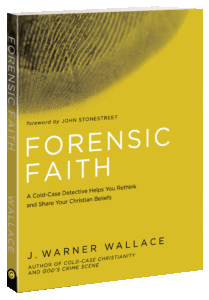 For more information about the nature of Biblical faith and a strategy for communicating the truth of Christianity, please read Forensic Faith: A Homicide Detective Makes the Case for a More Reasonable, Evidential Christian Faith. This book teaches readers four reasonable, evidential characteristics of Christianity and provides a strategy for sharing Christianity with others. The book is accompanied by an eight-session Forensic Faith DVD Set (and Participant’s Guide) to help individuals or small groups examine the evidence and make the case.