











In this episode of the Cold-Case Christianity Podcast, J. Warner Wallace applies the same cumulative-case reasoning used in criminal investigations to one of Christianity’s most enduring secondary debates. The virgin conception of Jesus is not in dispute. Scripture is clear: Jesus was conceived by the Holy Spirit and Mary was a virgin when He was born. But what happened afterward? Here is the audio podcast (the Cold-Case Christianity Weekly Podcast is located on iTunes or our RSS Feed):
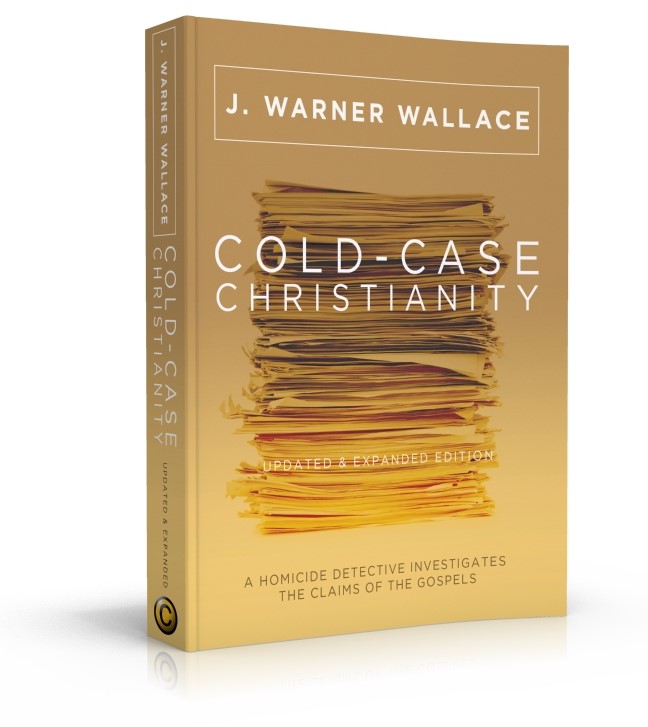 For more information about the reliability of the New Testament gospels and the case for Christianity, please read Cold-Case Christianity: A Homicide Detective Investigates the Claims of the Gospels. This book teaches readers ten principles of cold-case investigations and applies these strategies to investigate the claims of the gospel authors. The book is accompanied by an eight-session Cold-Case Christianity DVD Set (and Participant’s Guide) to help individuals or small groups examine the evidence and make the case.















Dwight Cover
September 17, 2026 at 6:04 am
Thank you for the excellent podcast on the perpetual virginity of Mary. The cumulative argument is compelling. I would offer, though, that the segment on the meaning of “until” in Matthew 1:25 could move from the modest weight you gave to it to much greater weight. Why? Two reasons: 1) The implicational force of “until” in 1:25 is inescapably connected to the force of the main verb “know”—a verb-force that considerably strengthens the probability that Matthew intends the reader to infer Joseph sexually consummated his marriage to Mary after Jesus was born. 2) The implicational force of “until” in 1:25 is consistent with the same force of about 280 other (Greek) Bible passages in the one of four semantic categories of “until” constructions to which it belongs—a semantic category into which the three “defense attorney” citations you raise in the podcast do not fall, rendering them invalid witnesses against 1:25, because they fail the “equivocation” test (informal fallacy).
On the first point above: In 1:24-25, Matthew strings together seven verbs, four of which Joseph performs. Of the seven verbs, six are positive actions in the aorist tense; and “did not know” is a negative action in the imperfect tense. Of the four actions Joseph performs, “he did …,” “he took …,” and “he called” are all positive and in the aorist tense. “He did not know” is negative and in the imperfect tense. Matthew rhetorically switches his presentation from straightforward, undefined reporting of positive actions with aorist tenses, to vivid, nuanced reporting with the negative action, “he did not know.” He is pausing and emphasizing “he did not know.” Of the available imperfect-tense nuances recognized by grammarians, the “beyond reasonable doubt” nuances in play in 1:25 are that Joseph did not begin “knowing” Mary (ingressive imperfect) and continue periodically “knowing” Mary (customary imperfect) until Jesus was born. If that is his intended emphasis, it is hard not to conclude “until” implies a change of action after the endpoint of Jesus’ birth. See https://bit.ly/4h4E5nL (3-5) for further discussion.
On the second point above: You rightly state the defense attorneys in this case are going to argue in front of the jury that a stated action + “until” + a temporal endpoint does not necessarily imply a change in the stated action after the endpoint. The context must govern the meaning of “until,” not the term itself. Fair enough. “DA’s,” from St. John of Damascus in the 7th/8th century (Exposition of the Orthodox Faith) to Dr. Ludwig Ott in the 20th century (Fundamentals of Catholic Doctrine, 207), have long argued that the very passages you cite on the podcast (Mt 28:20, “with you until the end of the age”; 2Sam 6:23, “Michal had no child until the day of her death”; and Genesis 8:7, “the raven went back and forth until the waters were dried up”) do not imply a change in action after the endpoint; and, therefore, the DA’s argue, we cannot necessarily infer a change in Joseph and Mary’s sexual relationship after the birth of Jesus.
But those passages, I assert, are invalid witnesses for a DA to bring before the jury in connection with Matthew 1:25. On the other hand, there are many truly valid witnesses to bring before the jury in support of a change in action after the endpoint (thus strengthening the cumulative case on the “until” point). How do I validate those assertions?
A deep-dive study of over 400 passages in the Greek text of Scripture that have an action + “until” + temporal endpoint yields the following points: 1) There are four semantic classes or categories into which temporal “until” passages can fall (to be outlined in a moment); 2) The semantic differences between those four classes of “until” passages are great enough to send the force of “until” in one direction or another; 3) therefore, because the respective semantic classes can take the significance of “until” in different directions, only the passages in the semantic category most closely correspondent to Matthew 1:25 can validly serve as witnesses to the force of “until” in Matthew 1:25. To use passages from any of the remaining three semantic categories is to commit the fallacy of equivocation on the meaning of “until”—thus rendering those passages invalid witnesses.
In any given context that has a temporal end-point, one must evaluate the significance of “until” on the basis of two questions: a) Is the end-point short-term, or long-term / ultimate? b) Is the end-point absolute or relative; that is, is the specified limit an actual limit that terminates the preceding action (hard stop) and after which an action change is implied, or does the specified limit stand in relation to some other contextual factor(s) that alter(s) the normal significance of “until”? In other words, not all temporal endpoints are equal, and we cannot treat them as equal. The four semantic-class constructions, then, are: 1) action + “until” + short-term & absolute endpoint; 2) action + “until” + short-term & relative endpoint; 3) action + “until” + long-term / ultimate & absolute endpoint; 4) action + “until” + long-term / ultimate & relative endpoint.
Matthew 1:25 falls into semantic-class #1; the birth of Jesus is a short-term endpoint and it is absolute in context. There are no contingent elements in play as the text stands.
Matthew 28:20 falls into semantic-class #4; “the end of the age” is a long-term / ultimate endpoint. Additionally, it is a relative endpoint, not an absolute one, because it stands as the outside element of a polar statement that has an unstated starting element in a figure of speech called a temporal merism (“from now until the end”). Its whole point is to emphasize the continuity / perpetuity of Christ’s presence, not imply a change. Matthew 28:20 is thus an invalid witness to bring to the stand against the significance of “until” in Matthew 1:25, because it is comparing an apple to an orange.
2Sam 6:23 falls into semantic-class #3; “the day of her death” is a long-term / ultimate endpoint, and an absolute one beyond which no action change is even possible. It is thus an invalid witness to bring to the stand against the meaning of “until” in Matthew 1:25.
Genesis 8:7 is probably not the best witness for a DA to bring to the stand simply because there are complexities between the Hebrew text and the Greek translation of the Hebrew that render clear interpretation hard to achieve. Probably, though, the DA will argue that “to and fro” or “back and forth,” soaring action by ravens will not cease just because the earth has dried. After all, it is the nature of ravens to soar. If that were the only notion in play, the DA may have a point in pitting it against Matthew 1:25. However, the infinitives absolute in the Hebrew text paint a picture of the raven repetitively flying away from the ark and returning to the ark (not into the ark, like the dove, but perhaps atop it) until the waters had dried up from the earth. One gets the idea that the raven was flying away from the ark and back to the ark—though not in any way that helped Noah clearly discern the state of affairs on the earth, as did the dove’s behavior. After the endpoint (dried earth), the need to use the ark as a place of rest was gone; the pattern portrayed in the infinitives absolute, therefore, ceased in that context. On that understanding, Genesis 8:7, if anything, argues for the commencement of marital relations between Joseph and Mary after Jesus was born, rather than against it.
Suffice it to say, the DA passages you cite in the podcast against commencement and maintenance of marital relations between Joseph and Mary do not stand the test of cross-examination, because they commit the fallacy of equivocation by importing the force of “until” in one semantic class upon “until” in another semantic class. See https://bit.ly/4h4E5nL (6ff) for further discussion.
Combining the force of the imperfect tense at the verb “know” with the force of around 280 same-semantic-class witnesses that show “until” to imply a change of action after the endpoint, it seems there is—beyond reasonable doubt—warrant to read Matthew as saying, “But Joseph did not commence and maintain sexual relations with Mary until after Jesus was born”—where the implication is strong that he did commence and maintain sexual relations with Mary after Jesus was born.