









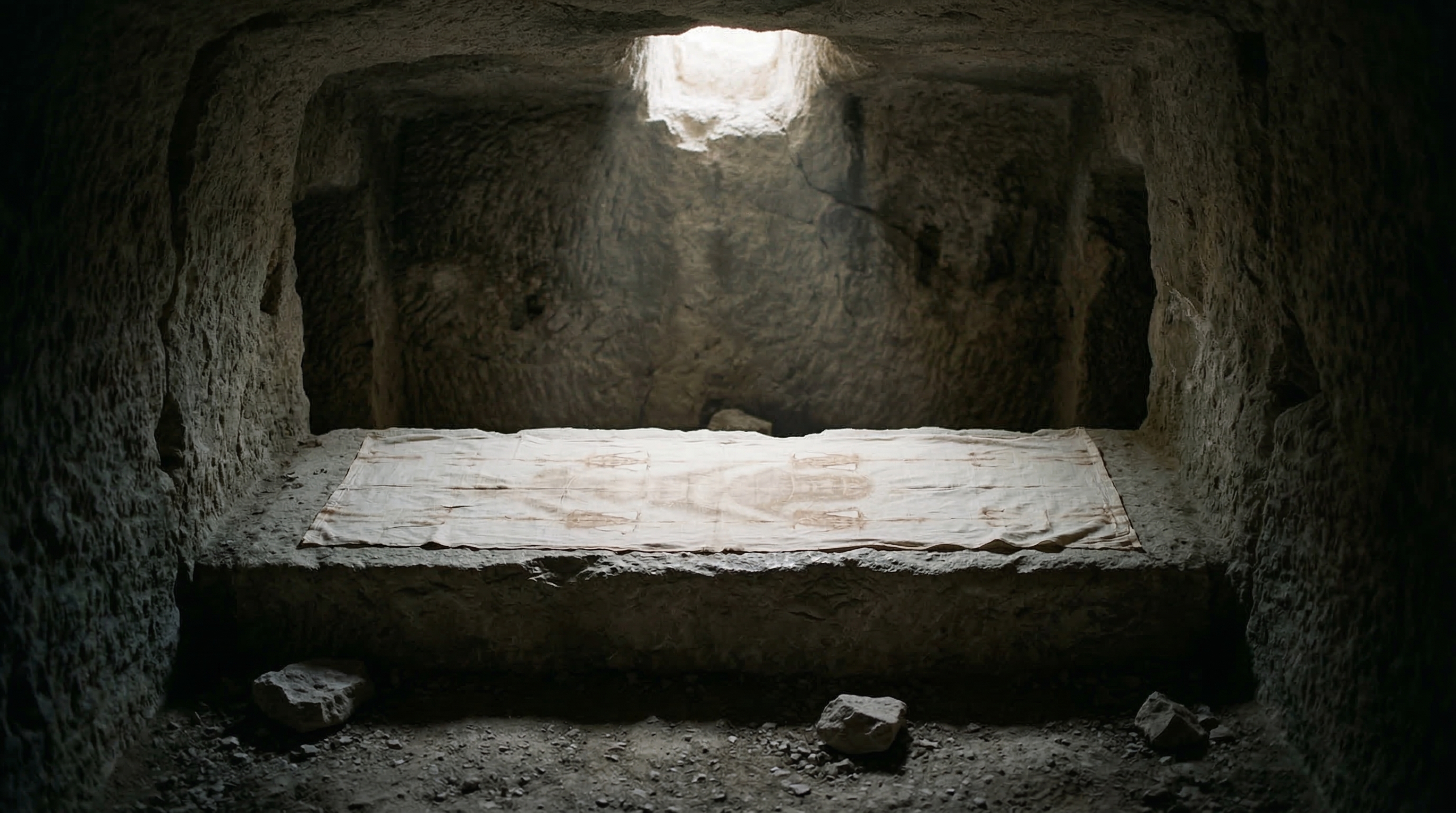
In this episode, cold-case homicide detective and Christian apologist J. Warner Wallace finally turns his investigative lens on one of the most talked-about religious artifacts in history: the Shroud of Turin. Is it a medieval forgery created for profit, or a powerful piece of physical evidence that points to the crucifixion of Jesus? J. Warner walks through the chain of custody, the historical record, the scientific testing, and the forensic details, while also exposing the limits of what any single piece of evidence can truly prove.
Drawing on decades of experience presenting cases to juries, he explains how a detective evaluates artifacts, weighs competing explanations, and navigates the space between “possible” and “reasonable” doubt. He also shows why—even if the Shroud were authentic—it could never replace the historical case for the resurrection grounded in early eyewitness testimony. If you’ve ever wondered whether Christians should use the Shroud of Turin when making a case for Christianity, or avoid it altogether, this episode will help you think it through carefully.
Here is the audio podcast (the Cold-Case Christianity Weekly Podcast is located on iTunes or our RSS Feed):
 For more information about the reliability of the New Testament gospels and the case for Christianity, please read Cold-Case Christianity: A Homicide Detective Investigates the Claims of the Gospels. This book teaches readers ten principles of cold-case investigations and applies these strategies to investigate the claims of the gospel authors. The book is accompanied by an eight-session Cold-Case Christianity DVD Set (and Participant’s Guide) to help individuals or small groups examine the evidence and make the case.












Dave Columbus
April 22, 2026 at 10:59 am
As usual, you do a great job examining the facts of the shroud.
A couple of questions:
1. Are there any other examples of the cunningly created technique? If a greedy charlatan was talented enough to produce something like this, It would be very unusual for him to not repeat it to make even more money.
2. Why don’t you talk about the remarkable image when seen as a photographic negative?
3. Why do you seemingly still trust the RC dating with the lack of careful storage, potential smoke damage from a fire, etc.
Daniel
April 22, 2026 at 1:31 pm
More recent studies and tests have been done, with the use of AI. Might be worth checking out.
Bernhard Sengstock, DC
April 22, 2026 at 6:44 pm
More to consider.
Hungarian Prayer Codex
The connection to the Sudarium
Travertine Limestone
Byzantine coins
Fold marks on shroud showing only face
Naked body
Image not made by hands
Invisible reweave evidence
Flagrum dumbell shaped marks
And of course the photographic negative and 3D properties
marv from Idaho
April 22, 2026 at 10:53 pm
Due to blood stains, the burial spices present and the type of fabric involved, I believe this is an actual burial cloth matching the type of cloths used in ancient burial practices.
I believe the man in the image is obviously deceased, yet who did not
decompose inside the burial cloth.
I understand, from scientific analysis, that the image is a double-sided photo-negative print of the crucified man, and which required a surge of energy, equal to a flash of lightning emanating from both front and back of the man, to create.
Such a flash of energy, inside a sealed tomb, would be unnatural.
Steve Conway
April 26, 2026 at 2:52 pm
If the shroud was proven physically, unequivocally to be the shroud —
where would be the role of faith?