









As a detective, I’ve spent decades analyzing evidence, evaluating testimonies, and building cases that can withstand scrutiny in a courtroom. This investigative mindset has taught me something crucial about belief itself—not all beliefs are created equal. In fact, there are three distinct ways we can hold any belief, and understanding these categories transforms how we approach faith, particularly our faith in God.
The Trap of Unreasonable Belief
The first way people hold beliefs is perhaps the most dangerous: unreasonable belief. This occurs when we maintain a position despite evidence pointing to the contrary. Take, for example, the old wives’ tale that warts come from frogs. We now have substantial medical evidence demonstrating that warts are caused by human papillomavirus, not amphibious contact. Yet if someone continues believing the frog theory despite this contrary evidence, they’re holding an unreasonable belief.
This same pattern shows up in matters of faith. Some people cling to religious ideas even when presented with compelling evidence that challenges their position. They’ve made their mind up regardless of what the facts might suggest, and no amount of evidence will budge them from their stance. This isn’t faith—it’s stubborn denial dressed up as devotion.
The Problem with Blind Belief
The second category is blind belief—accepting something as true without any real evidence to support it. This might seem more innocent than unreasonable belief, but it carries its own risks. Let me give you a personal example: I believe my father is my biological father, even though I wasn’t raised by him and have never taken a paternity test to prove it. I simply accept this belief without verification. I could be right, or I could be wrong—I’m essentially believing blindly.
Many people approach faith this way. They believe in God, accept religious teachings, or embrace spiritual practices without ever examining the evidence that might support or challenge these beliefs. They’re not necessarily wrong in their conclusions, but they’ve arrived at them accidentally, without the foundation that good evidence provides. While this might work in some situations, it leaves believers vulnerable when their faith is challenged, because they’ve never learned why their beliefs might actually be true.
The Power of Forensic Faith
The third way to hold belief is the most reliable: forensic belief, grounded in good evidence. When I believe that amoxicillin will help cure certain infections, I’m not just hoping or guessing. I base this belief on personal experience—I’ve taken the medication and seen its effects. More importantly, I’ve read the research reports explaining how and why it works. I have good evidence supporting my belief, making it reasonable and defensible.

This same approach applies to what we believe about God. A forensic faith is one built on evidence—historical, archaeological, philosophical, and experiential evidence that supports the truth claims of Christianity. It’s a faith that has done its homework, examined the data, and arrived at conclusions based on the best available information.
Now, I want to be clear about something important: even with a forensic approach to faith, you’re still going to have unanswered questions. You’ll still need to take steps of trust. No one can present every single piece of possible evidence for their worldview and remove all doubt—that’s simply impossible, and you won’t be able to do it either.
But here’s what you can do: you can ensure that the step of faith you’re taking is neither unreasonable nor blind. Instead, it can be a reasonable step based on solid evidence. When challenges come—and they will—you’ll have a foundation to stand on rather than just wishful thinking or cultural conditioning.
The difference between these three approaches to belief isn’t just academic—it’s transformational. A forensic faith gives you confidence in uncertainty, strength in adversity, and the ability to engage intellectually with both believers and skeptics. It transforms faith from mere hope into informed trust, and that makes all the difference in how you live out your beliefs in a world that’s constantly questioning them. A forensic faith gives you confidence in uncertainty, strength in adversity, and the ability to engage intellectually with both believers and skeptics. Share on X
Your faith doesn’t have to be unreasonable or blind. It can be forensic—evidence-based, thoughtful, and defensible. The question isn’t whether you have enough faith, but whether you have the right kind of faith.
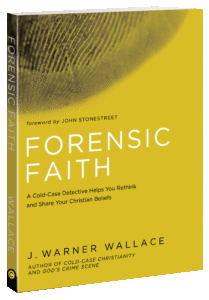 For more information about the nature of Biblical faith and a strategy for communicating the truth of Christianity, please read Forensic Faith: A Homicide Detective Makes the Case for a More Reasonable, Evidential Christian Faith. This book teaches readers four reasonable, evidential characteristics of Christianity and provides a strategy for sharing Christianity with others. The book is accompanied by an eight-session Forensic Faith DVD Set (and Participant’s Guide) to help individuals or small groups examine the evidence and make the case.





Sharon Heath-Medina
January 1, 2026 at 10:18 am
Hi! I was really excited when I first came across one of your videos back in September 2025 for a class assignment, and I’ve followed your work ever since. I’ve always been interested in forensics, but never in connection with faith, so your perspective has been really refreshing. Your story is inspiring, and I appreciate how clearly you explain things.
I’m currently studying apologetics, and your website has been a great help. Today’s reading really resonated with me, especially the idea that many people believe things out of tradition rather than evidence. Like the Bereans, I think it’s so important to examine what we believe instead of accepting things blindly. Thank you for the work you do, and God bless you!