















Trust in the gospel accounts, despite their Christian authorship, is a topic that comes up often in conversations about the reliability of the New Testament. As a detective who has spent years evaluating eyewitness testimony, it’s not surprising that people ask me, “How can the gospels be trusted if Christians wrote them?” The assumption seems to be: if you want anything truly credible about Jesus, it can only come from a non-Christian source. But let’s unpack why that line of reasoning falls short and why, in fact, Christian authorship can enhance—not diminish—the reliability of these accounts.
If you’ve ever spent time in a courtroom, you’ll know that trusting a witness out-of-hand is never wise. I’ve learned that personally by being burned during cross-examinations and investigation broadcasts. It’s a risky thing to place confidence in a witness before carefully vetting their story. So, in my work as a detective, I don’t merely accept what witnesses say—I rigorously test them. There’s a standard template we apply to every eyewitness account: Were they truly present to witness what they describe? Can their story be corroborated by evidence or other witnesses? Has their narrative remained consistent over time? Do they possess any biases that would tempt them to misrepresent the truth? These are the same four areas I employ when I evaluate the gospel authors.
Once a witness has been evaluated across these dimensions and they pass the tests, the judge instructs the jury to trust their testimony. Importantly, testing—rather than dismissing—the witness on account of their perspective or experiences is the gold standard for truth-seeking. The same method applies when looking at Matthew, Mark, Luke, and John. Some object, saying, “Christians are biased.” But there’s an obvious oversight here. Yes, Matthew ultimately became a Christian, but look closely at his background. He started out as a tax collector named Levi—not a member of John the Baptist’s group, not a friend of Peter or Andrew, not one who grew up expecting a Messiah. He encountered Jesus, witnessed miracles, listened to teaching, and after observing all these things firsthand, became a follower. Don’t hold his subsequent transformation against him as if it poisons the well. The fact that someone who wasn’t predisposed to belief chose to follow Christ after seeing what he saw lends real weight to the testimony.
This same logic applies broadly. If one were to insist on testimony only from those entirely indifferent or hostile to the subject, that standard would disqualify nearly every historical source we trust in any field. In my experience, the most powerful testimony often comes from those who once had no connection, or even had some bias against, the truth they later defended. Matthew’s transformation wasn’t the result of a preset agenda; it was the natural outcome of encountering the evidence. Likewise, the gospel writers did not begin as Christian evangelists. Their conversion followed the events they witnessed—after the fact, not before. Dismissing their testimony because of their later convictions misses the point of investigative work and the nature of eyewitness reliability. If one were to insist on testimony only from those entirely indifferent or hostile to the subject, that standard would disqualify nearly every historical source we trust in any field. Share on X
In reality, authentic eyewitness accounts are not weakened by the personal convictions the witnesses develop because of what they’ve seen. They’re strengthened by the lived experience that led to those convictions. No honest investigator disqualifies a witness solely on the basis that their experience transformed them. Rather, the investigator looks for evidence of truthfulness, opportunity, supportive facts, and integrity over time. That’s how I’ve approached the gospel accounts—and why I find them trustworthy. Don’t blame the gospel authors for becoming Christians after what they saw. Instead, recognize that their transformation is a testament to the power and reality of what they witnessed. That’s the kind of testimony I look for, and it’s why, as both a detective and a Christian, I find the gospel accounts entirely credible.
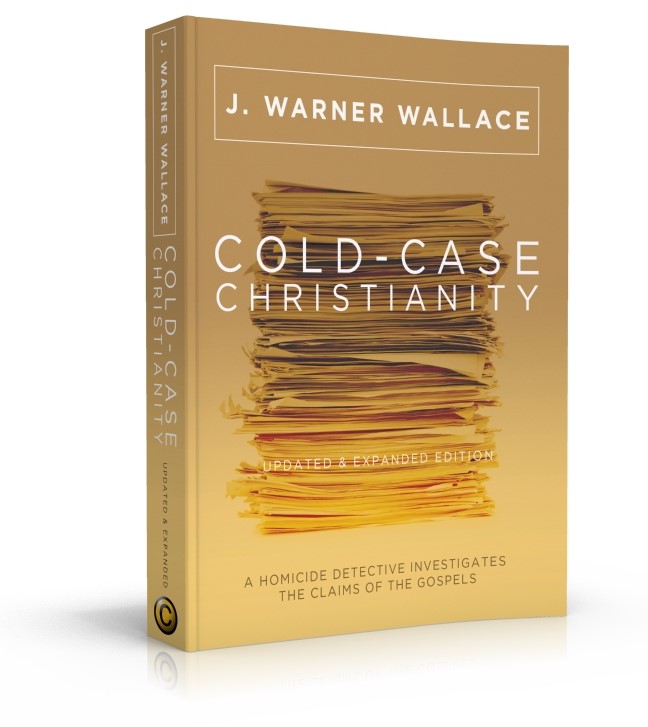 For more information about the reliability of the New Testament gospels and the case for Christianity, please read Cold-Case Christianity: A Homicide Detective Investigates the Claims of the Gospels. This book teaches readers ten principles of cold-case investigations and applies these strategies to investigate the claims of the gospel authors. The book is accompanied by an eight-session Cold-Case Christianity DVD Set (and Participant’s Guide) to help individuals or small groups examine the evidence and make the case.







Theandra
January 2, 2026 at 7:25 am
Thanks for your interesting post. I think you said something to the effect that the eyewitness testimony of the resurrection of Christ in the NT presented by sceptics turned believers adds weight to the veracity of their resurrection accounts. On the other hand, we can observe that there are many cases of believers who look at the same evidence and become sceptics, or sceptics who look at the evidence and remain sceptics. Elsewhere you have said that the eyewitness testimony of witnesses to the risen Christ recorded in the New Testament is of a different order than the personal testimony of later believers who encounter God-in-Christ, people who were not eyewitnesses of the risen Christ. Could you direct me to a discussion of how this latter principle impinges on my first observation? In other words, if the NT eyewitness testimony about the resurrection is so compelling, why are (some/many) people unconvinced?
J. Warner Wallace
January 2, 2026 at 6:29 pm
This may help: https://coldcasechristianity.com/writings/why-some-people-simply-will-not-be-convinced/