
















As Christians, we often find ourselves juggling countless responsibilities—family, work, kids, and all the distractions that come with daily life. Yet, alongside these commitments, many of us long to deepen our understanding of what we believe and why we believe it. We want to become better Christian case makers, able to defend our worldview with clarity and confidence. The question is, how do we do that when our minds are already so full? How can we meaningfully engage in the discipline of Christian apologetics without feeling overwhelmed?
The truth is, we all already practice discipline in ways we might not even recognize. Ask anyone who’s into sports who won the Super Bowl or the NBA Finals, and they’ll probably tell you without hesitation. They might even know how many home runs their favorite player has hit so far this season. Why? Because they care enough to follow the details. They’re paying attention. They’ve built a daily habit of staying informed about the things they love most.
That same principle applies to our spiritual life. If you really want to know what you worship, take a good, honest look inside your head. What fills your thoughts every day? Where have you invested your attention and time? Our mental bandwidth is a limited resource, and we fill it with what matters most to us. For some of us, that’s sports. For others, it might be entertainment, news, or hobbies. There’s nothing inherently wrong with those things, but they reveal what we value most. If you really want to know what you worship, take a good, honest look inside your head. What fills your thoughts every day? Share on X
I’m just as guilty as anyone. If you looked at my podcast list, you’d see it’s about evenly divided between sports and theology or apologetics. My wife often teases me about it—and she’s right to do so—because our choices reflect our loves. It’s easy to justify our listening habits or reading interests, but in the end, they give away our priorities. And that realization can be sobering.
What I’m not suggesting is that you suddenly pile 20 extra hours a week onto your schedule. Instead, I’m calling for an exchange—swapping some of what already occupies your time with something that will strengthen your Christian thinking. It’s not about doing more; it’s about redirecting what you already do. Redirect your mental and emotional investments toward the things that matter most in the long run—toward developing a disciplined approach to your faith.
For me, that discipline looks like a daily rhythm of consuming apologetic content. I use an RSS reader to follow over 600 apologetics blogs. Each day, I comb through new posts, retweet the best dozen or so articles, and stay current with what’s happening in the world of Christian case making. That may sound extreme, but for me, it’s become a habit—a healthy one. It keeps me sharp, engaged, and constantly learning. The point isn’t to copy my method but to find your own way of incorporating a consistent rhythm of spiritual and intellectual growth. Maybe that’s following a few apologetics podcasts. Maybe it’s subscribing to a handful of blogs or newsletters. The key is to make it a daily discipline.

We live in an age where information is more accessible than ever. There may not be an ESPN for Christian apologetics, but there are countless blogs, podcasts, and YouTube channels dedicated to building your faith and equipping you to share it. The opportunities are there—we just need to choose them. Instead of scrolling through another news app or sports update, what if you spent that same time reading a thoughtful article about the resurrection, the reliability of Scripture, or moral truth?
Discipline is at the heart of every argument we make well—whether in sports, in work, or in life. Developing the habit of daily engagement with Christian evidence trains our minds to think critically, our hearts to love deeply, and our souls to stay anchored in truth. In the end, it’s not about adding something new to your already overcrowded schedule. It’s about choosing better. And when you trade in some of your worldly disciplines for spiritual ones, you’ll begin to see your faith not just as a belief system, but as a well-reasoned, well-lived conviction.
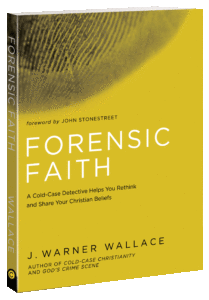 For more information about the nature of Biblical faith and a strategy for communicating the truth of Christianity, please read Forensic Faith: A Homicide Detective Makes the Case for a More Reasonable, Evidential Christian Faith. This book teaches readers four reasonable, evidential characteristics of Christianity and provides a strategy for sharing Christianity with others. The book is accompanied by an eight-session Forensic Faith DVD Set (and Participant’s Guide) to help individuals or small groups examine the evidence and make the case.