















 Several years ago, I tweeted an article in LifeNews entitled “Three Terms Pro-Lifers Should Avoid That De-Humanize Unborn Babies.” The author, Kelsey Hazzard, made an excellent point about our use of words when arguing for the pro-life position. Hazzard argued that the terms, “first days/weeks/months of life”, “rapist’s child”, and “expectant parent/going to be a parent” have a subtle but powerful impact on the strength of our arguments. It’s an interesting read and it highlights the rhetorical power of words in this debate. As I read the article it reminded me of one of my own concerns related to the language in the pro-life dialogue. I have been trying to eliminate the term, “fetus” from my vocabulary for many of the same reasons that Hazzard suggested we eliminate the three aforementioned terms. I think the word “fetus” is a dehumanizing expression that allows people to objectify the unborn.
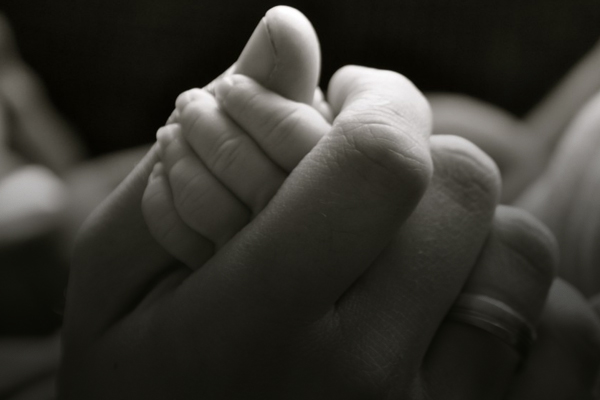
There are two problems with the word. First, the word “fetus” sounds more scientific than conversational; it is more academic than personal. It’s like the difference between “metacarpal appendage” and “hand”. I can accurately say that I held my wife’s metacarpal appendage last night on the way home from dinner, but most people will have difficulty seeing this as an act of affection. My language has abstracted her hand and the nature of my actions. If I want to accurately (and emotively) communicate my actions to folks without a scientific background, I need to pick words that are rooted in our common experience rather than scientific concepts. Secondly, the word “fetus” can be applied to any number of non-human species. Skunks also have fetuses. When we use the term “fetus” to describe the unborn, we are likely to associate it with other forms of life that are simply not human. Our language inadvertently moves the target from human life to other forms of life that we may not consider as precious.
I think we need to return “humanity” to the terms we use when describing the unborn. We need to use a term that identifies the unborn as a precious human being and connects it to the continuing life of this human being over time, both in the womb during pregnancy and out of the womb after birth. So rather than use the term “fetus” when describing the unborn, I am determined to use the word “fetal human”. This expression seems to meet the criteria satisfied by the word “fetus”, while properly identifying the unborn as the same human who will eventually enter into other stages of human development. I have been a fetal human, an infant human, a prepubescent human, and a mature human. As a human being, I have experienced all of these stages of development. The term “fetal human” allow me to capture the distinct nature of my humanity and apply it to every level of my development. I may have been progressing between one stage of development to the next over the past fifty-two years, but I’ve always been a human. The term “fetal human” recognizes this reality.
Language is important. When we allow the debate to embrace terms that objectify and dehumanize the unborn, we give ground unnecessarily to those who would deny the humanity of fetal humans. That’s why I’m doing my best to stop using the term “fetus”.
 For more information about the reliability of the New Testament gospels and the case for Christianity, please read Cold-Case Christianity: A Homicide Detective Investigates the Claims of the Gospels. This book teaches readers ten principles of cold-case investigations and applies these strategies to investigate the claims of the gospel authors. The book is accompanied by an eight-session Cold-Case Christianity DVD Set (and Participant’s Guide) to help individuals or small groups examine the evidence and make the case.
J. Warner Wallace is a Dateline featured Cold-Case Detective, Senior Fellow at the Colson Center for Christian Worldview, Adj. Professor of Christian Apologetics at Talbot School of Theology, Biola University, author of Cold-Case Christianity, God’s Crime Scene, and Forensic Faith, and creator of the Case Makers Academy for kids.
Subscribe to J. Warner’s Daily Email












Pingback: If It’s a Human at a Crime Scene, It’s a Human in the Womb | Apologetics ForumApologetics Forum
Pingback: If These Reasons Wouldn’t Justify Killing a Kitten, Why Would They Justify Abortion?
Pingback: Midweek Apologetics Roundup - Hope's Reason
Pingback: mid-week apologetics booster (3-30-2017) – 1 Peter 4:12-16
Pingback: Midweek Apologetics Roundup - Stephen J. Bedard