



Videos
J. Warner Wallace, author of God’s Crime Scene, discusses the importance of Christian Case Making, particularly for young Christians who are challenged about their...
Hi, what are you looking for?


Jesus Is NOT God – Or Is He? (Podcast)

Global Flood or Ancient Myth? What the Evidence Really Shows (Podcast)
Is Jesus REALLY God? The 3 Chapters That Settle It (Podcast)

Alien Shock: Would First Century Christians Even Recognize Our Churches? (Podcast)

John 1 Destroyed My ‘Just-a-Prophet’ Jesus: A Cold-Case Detective Makes the Deity Case (Podcast)

J. Warner explores the reliability of the evidence for Jesus, explaining that the skepticism toward the Gospels often stems from a distrust of their...

When I ask Christians across the country, “Why are you a Christian?” the top three answers are almost always the same. In fact, after...
Jesus is NOT God…or is He? In this episode, I walk through the claim that “Jesus is NOT God” and treat it like a...

J. Warner urgently warns Christian parents that simply teaching young people is not enough—effective faith formation requires rigorous training, testing, and equipping them to...


As Christians, we often find ourselves juggling countless responsibilities—family, work, kids, and all the distractions that come with daily life. Yet, alongside these commitments,...

What sets Christianity apart from every other theistic worldview is its foundation in history. Many belief systems offer beautiful wisdom and moral guidance—collections of...

Apologetics has always held a vital place in my own walk as a Christian and in the life of the Church. Yet I’m not...

If you’re someone who’s taken your faith in Jesus seriously, there’s a good chance you’ve already been discipled by somebody. But often, that raises...
J. Warner explains that the best historical evidence for Christianity is the cumulative case for the reliability of the Gospels, built from hundreds of...

Is the story of Noah’s flood just another ancient myth, borrowed from earlier pagan texts, or a record of a real historical catastrophe? In...
In this episode of the Cold-Case Christianity Podcast, J. Warner Wallace tackles one of the most important questions in the Christian faith: Is Jesus...
Would first‑century Christians even recognize what we call “church” today? In this episode, J. Warner Wallace uses a simple “alien thought experiment” to examine...
This episode walks through John 1 verse by verse to show why the apostle John leaves no room for a “just-a-prophet” Jesus and instead...
J. Warner Wallace, author of God’s Crime Scene, discusses the importance of Christian Case Making, particularly for young Christians who are challenged about their...

J. Warner Wallace, author of God’s Crime Scene, was interviewed by Bobby Conway (The One Minute Apologist) and discussed the nature of consciousness and...
In this video (excerpted from J. Warner Wallace’s appearance on the Creation Today Show), J. Warner summarizes the case for the reliability of the...
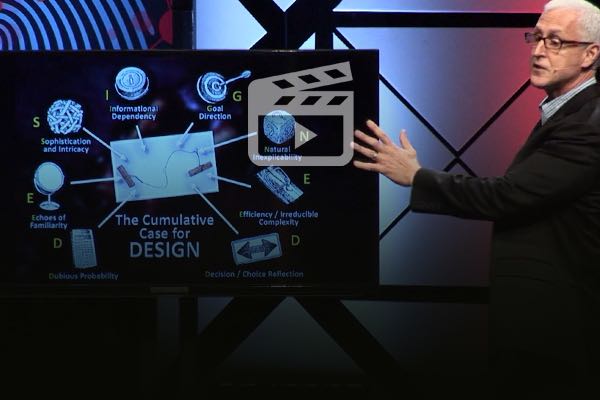
This video, excerpted from J. Warner Wallace’s presentation of the evidence for God (from his book, God’s Crime Scene), summarizes the case for Gods...

J. Warner Wallace, author of God’s Crime Scene, was interviewed by Bobby Conway (The One Minute Apologist) and discussed the nature of inculpating and...

When I first began investigating the reliability of the New Testament Gospels, I found myself at an important philosophical crossroads. As I employed my...
This video, excerpted from J. Warner Wallace’s presentation of the evidence for God (from his book, God’s Crime Scene), summarizes the case for Gods...
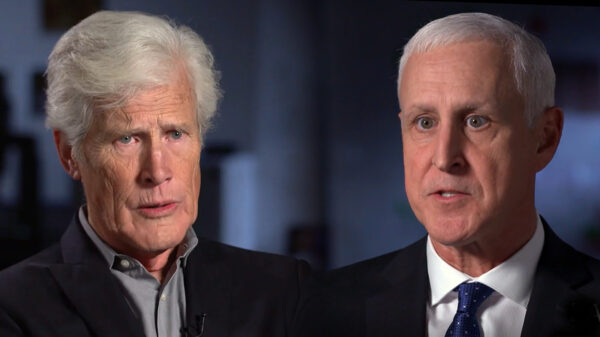
Dateline has been very good to me over the years. They’ve repeatedly featured my cold-case investigations until I became the most televised detective in...