













When I ask Christians across the country, “Why are you a Christian?” the top three answers are almost always the same. In fact, after years of asking this question, I can usually predict the responses of any congregation before I even pose it from the stage. The first and most common answer is, “I was raised in the church. My parents were Christians. I’ve been a believer all my life.” It’s part of their family heritage. The second most popular answer is, “I had an experience that convinced me God is real.” Maybe it was an answered prayer or a moment that felt miraculous—something that seemed to affirm that their beliefs were true. And third, people often say, “I was a different person before I met Jesus. He changed my life.”
There’s nothing wrong with those answers; in fact, they’re good ones. But here’s what I’ve noticed: when I talk to my own family, many of whom are Mormons or atheists, I hear the same kinds of answers. My Mormon brothers and sisters will say, “I was raised in the church. I’ve had personal experiences that confirmed my faith. My life is better because of my beliefs.” These are sincere responses—but if you don’t believe Mormonism is true, doesn’t that raise a concern? Why do our answers as Christians sound just like the answers given by people in belief systems we don’t think are true? Shouldn’t our reasoning be different if Christianity is actually grounded in reality?
That question changed how I approached faith. It made me realize that we, as followers of Jesus, need to have better answers. Not just truthful in our hearts, but evidentially reasonable in our minds. If you’re a pastor, this call is for you too. It’s not enough to preach only what the Word of God says; we must also explain why we have good reasons to trust what it says. Our congregations deserve to understand the historical, philosophical, and scientific foundation behind the Christian worldview. If you’re not getting that from the pulpit, take it upon yourself to dig deeper. The church becomes stronger—not weaker—when every believer learns how to make the case for the hope they have. The church becomes stronger—not weaker—when every believer learns how to make the case for the hope they have. Share on X
We live in an age where information is everywhere. There’s no excuse to say, “I just didn’t know how to look into that.” The truth is a few clicks away. What’s often missing isn’t access but passion. We already spend hours each week constructing arguments about things that matter far less than eternity: who will win the next NBA finals, who should be MVP, or which political candidate is right. We research, debate, and share our opinions with enthusiasm. That investigative energy is part of who we are—it’s how our minds were built. What if we simply redirected that investigative passion toward the truth that matters most?
Imagine if we spent as much time studying the evidence for the resurrection as we do watching our favorite Netflix series. Believe me, I get the temptation. I binge-watch shows too, but when those eight hours are gone, they’re gone for good. What if we invested even a fraction of that time in learning to articulate the case for God’s existence, the reliability of Scripture, or the truth of the gospel? What if we were as quick to share well-reasoned facts about Jesus as we are to share opinions about sports or politics?
That’s the challenge I’m laying before you—before all of us. Becoming a Christian case maker isn’t about earning salvation or scoring points in debates. It’s about expressing love—love for God with all our minds, and love for others by giving them good reasons to trust the truth. Now is the time for believers to rise above cultural indifference and casual answers. Let’s use our time and attention, our passions and resources, to dig into the evidence that supports the faith we claim to hold. Because in the end, if Christianity is true—and it is—it’s worth investigating, defending, and sharing with a world that desperately needs it.

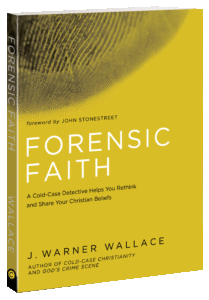 For more information about the nature of Biblical faith and a strategy for communicating the truth of Christianity, please read Forensic Faith: A Homicide Detective Makes the Case for a More Reasonable, Evidential Christian Faith. This book teaches readers four reasonable, evidential characteristics of Christianity and provides a strategy for sharing Christianity with others. The book is accompanied by an eight-session Forensic Faith DVD Set (and Participant’s Guide) to help individuals or small groups examine the evidence and make the case.